
ACEBA launches Circular Business Facilitation Initiative
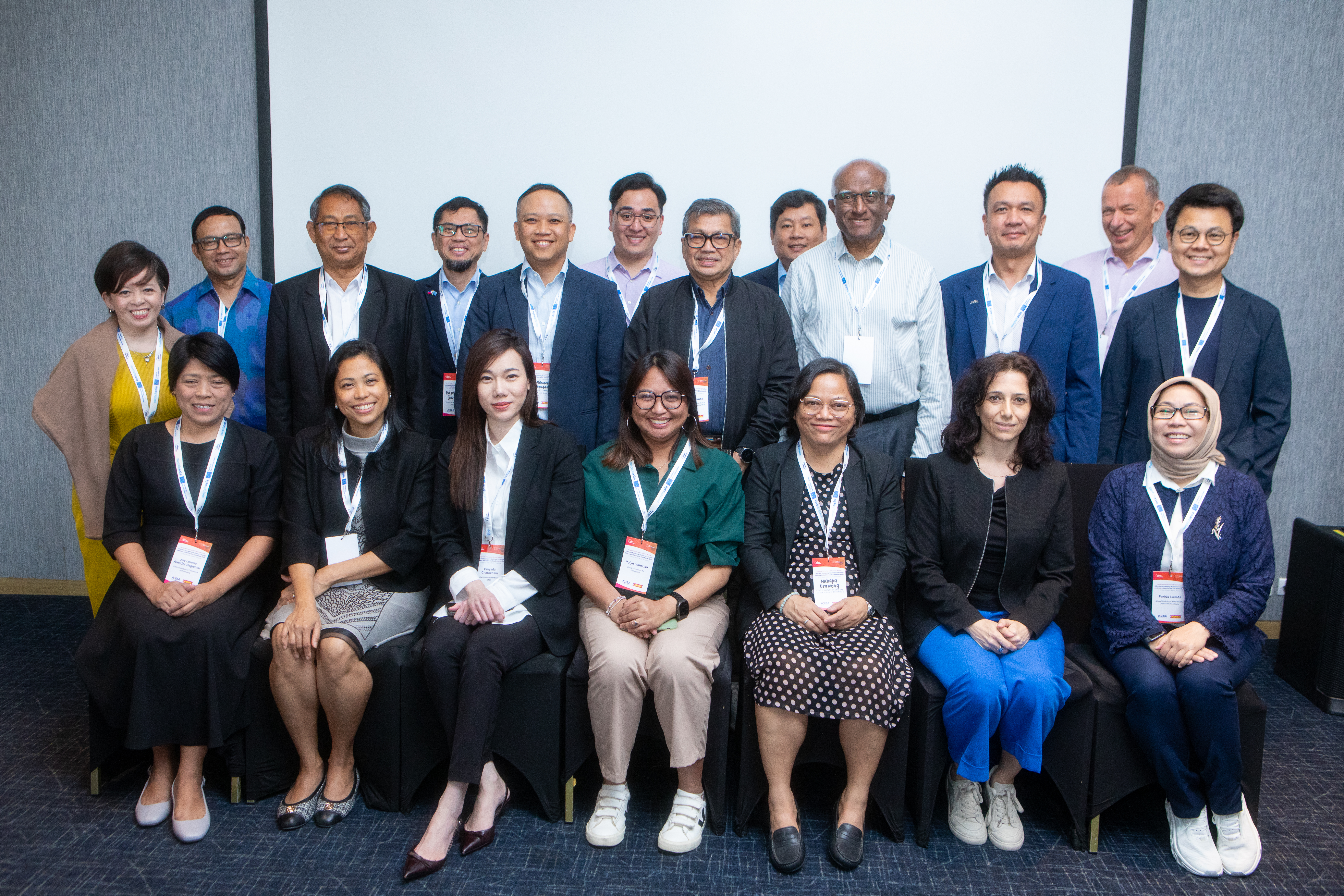
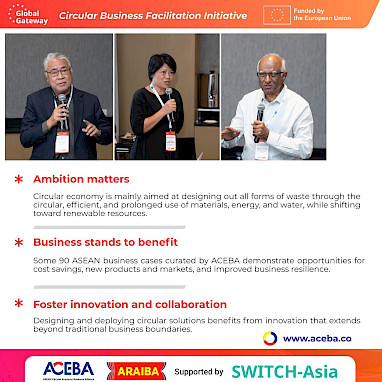
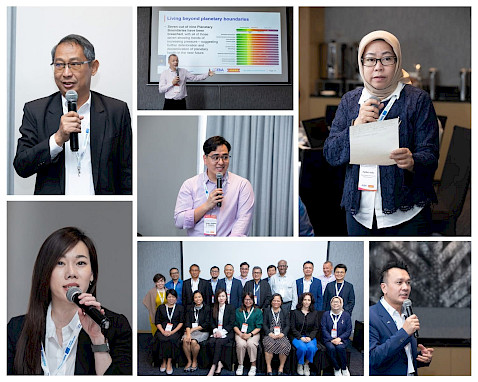
The ASEAN Circular Economy Business Alliance (ACEBA), supported by the EU SWITCH-Asia Programme gathered 15 representatives from different business support and capacity building institutions in the Philippines, Lao PDR, Indonesia, Thailand, and Vietnam to form the initial cohort of the ACEBA Circular Business Facilitation Initiative. An inaugural workshop and planning meeting was convened from 11-13 March 2026 in Manila, Philippines to kickstart this initiative.
The ACEBA Circular Business Facilitation Initiative seeks to create cadres of circular business facilitators and changemakers who can support businesses in their home country in circularizing their products, services, and operations. These are expected to help local businesses map their circularity opportunities and risks, navigate circular ambitions, and develop actionable strategies, leaving space for sector and technology experts to support the development and implementation of specific technical and business model solutions.
Mr. Thomas Thomas, ACEBA co-convenor and ARAIBA Sdn Bhd Chair, opened the workshop and described what a “changemaker” is:
“A changemaker is someone who advances change for the good of all. It is someone who is intentional about and creative in solving a social or environmental problem. In the circular business space, a changemaker is someone who is biased towards urgent and ambitious circularity action; is a creator and is a persistent solution- finder; one who inspires and enables other to act, and act together; and influences through Appreciative Inquiry.”
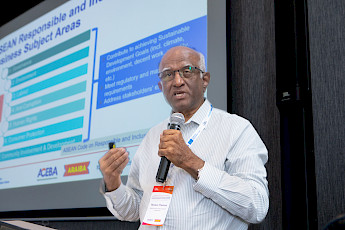 He added that Circular Business Facilitators/ Changemakers inquire and ask relevant questions based on a clear vision and understanding of the ambition for circular economy. This involves bringing different kinds of knowledge and experience and leading by example; building trust, transparency and integrity with others; and facilitating co-creation and co-implementation of appropriate and effective circular solutions. They mentor businesses and guide their circularity transition with patience and persistence.
Leading the workshop facilitation was Dr. Rene Van Berkel, ACEBA co-convenor, EU SWITCH-Asia senior expert on Circular Economy, and faculty of Thammasat University (Thailand). He elaborated on the what and why of CE as a pathway for ambitious actions towards sustainable consumption and production (SCP) and climate targets:
“For 35 years, we have been talking about SCP and we then moved to green growth in the 2000s, and now we go into circular economy to achieve Sustainable Development Goals (SDGs). Where we want to go and have is CE as a pathway for achieving sustainable resources—using natural resources more efficiently, circularly, and shifting to more renewable materials to move closer towards SCP and achieve net zero impact on climate, nature, and environment. This has gained some traction over the years, with circularity thinking adding the urgency and ambition to drive necessary transformations towards internationally agreed climate, environment, and sustainable development goals.”
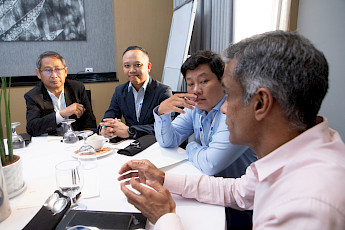
As such, CE is at the nexus of four critical development agendas: responsible business, innovation, sustainable resource use, and sustainable development.
After an introduction on CE perspectives, principles, practices, and models--using ACEBA business cases as illustrative examples--the participants were guided through in-depth discussions of and group exercises on circular business solutions, circular business transition, and circular business services. Focusing on CE as an open-ended innovation space spanned by resource use strategies and circular value chains, participants worked on tasks such as analyzing business cases using a circular solutions canvas, conceptual redesign of everyday appliances and furniture to become circular, and crafting circular ambitions for a sample enterprise.
ACEBA’s SADI Framework (Stocktake-Ambition-Delivery-Integration) for business transition was also introduced to participants, with ACEBA’s business guide as main reference. As a practical exercise, participants analyzed a sample business model, and tasked to propose scale up strategies and increase its investment readiness.
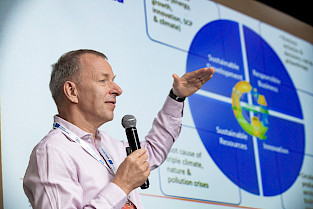 Dr. Van Berkel homed in on positive business development rooted in “Appreciative Inquiry”—exploring what is going right in a business (structure, strategies, systems, skills, etc.) and engaging individuals in the organization to create positive, transformational change—as the facilitation approach when businesses deploy the SADI activities for their circular transition. The circular design and innovation cycle (discovering circular opportunities for the business, creating circular business design concepts and plans, and crafting a roadmap for implementation) was also presented to achieve desired/ targeted results.
Aside from CE mentoring, Circular Business Facilitators can explore and offer a variety of services to support business through awareness raising, peer learning, and networking; circular business trainings; and circular design workshops. Participants were also guided through scoping exercises per country to identify key actors working towards CE , their mandates, interests, and capacity building-related programs/ projects, what kinds of interventions are feasible and can be launched during 2026, and potential partners for identified projects. ACEBA, through its country leads and experts, will be extending technical and advisory support to in-country capacity building projects/ activities, as needed.
The ACEBA Circular Business Facilitation Initiative is one of the major programs being implemented to develop force multipliers and champions in ASEAN Member States. To complement this initiative, a CE Accelerator Program and diagnostic tools for circularity are being considered. These initiatives are aligned with key programmes supported by the European Union in ASEAN and in member states. Circular Economy is a pillar of EU SWITCH-Asia projects implemented in the region, and a key crosscutting priority for the EU to support business and investment under its Global Gateway initiative.
For more information visit: www.aceba.co
Contact: [email protected]
Share: