
Navigating the Circular Transition for Thai Businesses
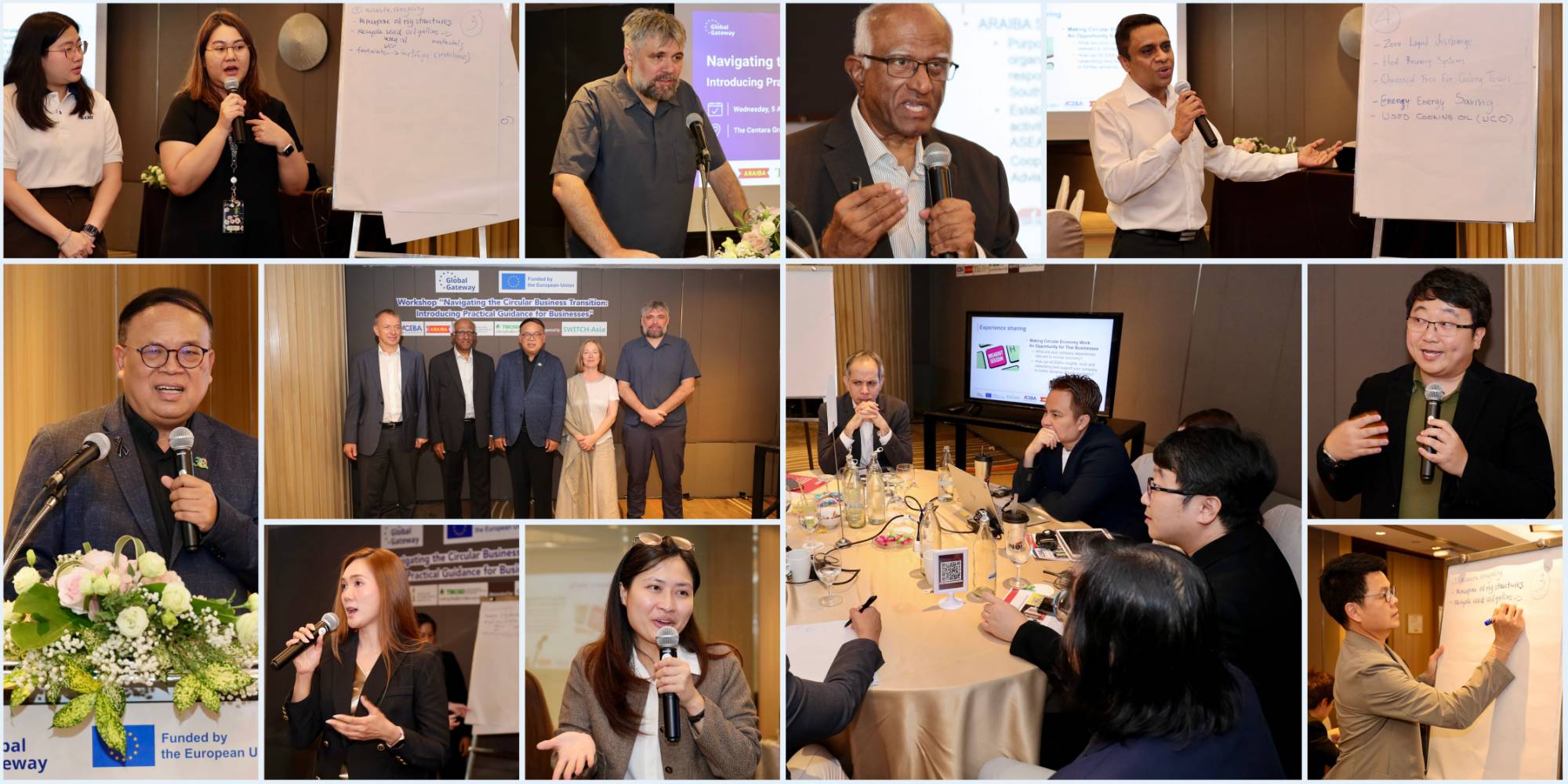
The transition to a circular economy is rapidly becoming a business imperative for Thai companies seeking to remain competitive in domestic and international markets.
The circular economy is no longer a question of environmental good practice – it is fast becoming a necessity for market access, business opportunities, and increased competitiveness and resilience for Thai businesses.
On August 5, 2026, the ASEAN Circular Economy Business Alliance (ACEBA), in partnership with the Thailand Environment Institute (TEI) and with the support from the EU SWITCH-Asia Policy Support Component (PSC), organized a workshop titled "Navigating the Circular Business Transition: Introducing Practical Guidance for Thai Businesses" at the Centara Grand at Central Plaza Ladprao, Bangkok. About 50 participants joined the event, from a variety of large and medium-sized industries, including petrochemical and chemical, food and beverage, automotive and rubber, construction materials, technology and telecommunications, energy, apparel, and the services sector, alongside academic institutions, research institutes and government agencies.
The transition to a circular economy is rapidly becoming a business imperative for Thai companies seeking to remain competitive in domestic and international markets. The workshop demonstrated that circularity is no longer driven solely by environmental considerations, but increasingly by market requirements, resource efficiency and business resilience. Participants were introduced to practical guidance, tools and business examples developed by ACEBA to help companies assess their readiness, identify opportunities and strengthen their circular business models. Importantly, the workshop marked the beginning—not the end—of the journey. Businesses were invited to pilot the Circular Business Check, participate in follow-up design workshops, share their circular business cases and join the growing ACEBA network to accelerate Thailand's circular transition.
Going circular becomes a business necessity, not just for regulatory compliance
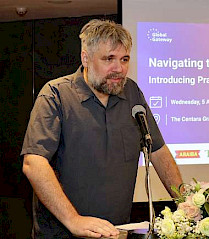 Opening the workshop, Mr. Michael Bucki, Counsellor for Environment of the EU Delegation to Thailand, noted that the European Union has introduced a growing number of regulations since 2025 aimed at shifting product design and manufacturing and materials production towards a circular economy. Circular economy priorities are now embedded in the EU's product regulations, making compliance increasingly important for businesses exporting to the European market. He commended Thailand for being well prepared for this transition but stressed that the regulations are designed to drive circularity from the very beginning of the value chain – starting with product design – rather than relying solely on downstream waste collection, recycling and energy recovery. Products designed with circularity in mind last longer and ultimately generate less waste and use resources more efficiently. As society faces the triple planetary crisis of climate change, biodiversity loss, and pollution, alongside growing pressure on natural resources, the circular economy offers a practical pathway to business to reduce risks, improve resource efficiency, and strengthen long-term resilience.
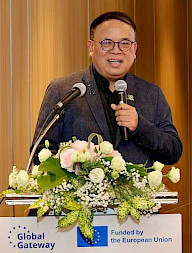
Dr. Wijarn Simachaya, President of the Thailand Environment Institute (TEI) and ACEBA Thailand Lead, emphasized that the circular economy is becomingessential for business performance and resilience—no longer an environmental ‘nice to have’ . He highlighted the significant opportunities for Thai businesses to reduce costs, create new value, and remain competitive in future markets. With Thailand's Bio-Circular-Green (BCG) Economy Policy setting the policy direction, he encouraged businesses to work together to accelerate the country's transition towards a circular economy.
Driving a circular economy ecosystem requires collective action. By turning policy into industrial practice, Thai businesses can lead the transition towards a more circular and sustainable future, said Dr. Wijarn Simachaya, President of TEI and ACEBA Lead in Thailand
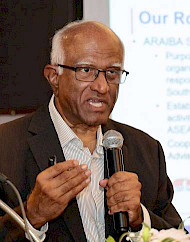 Mr. Thomas Thomas and Dr. Rene van Berkel, co-convenors of ACEBA and senior experts for the EU SWITCH-Asia Policy Support Component, set out why the operating environment for business in the region is shifting. Resource, climate and pollution pressures are translating into commercial risk, while the regulatory picture in export markets is tightening, especially in the EU market. Thai companies, for example, that trade with the EU will have to follow the strict EU regulations aimed at designing waste upstream and zeroing out waste during production and post-consumption. ACEBA has positioned the circular economy as a responsible business and innovation opportunity, starting with an environmental and natural resources lens. This delivers responsible business outcomes with improved Environment, Social and Governance (ESG) indicators, as ACEBA has demonstrated with over 90 Southeast Asian circular economy business cases.
From ambition to impact
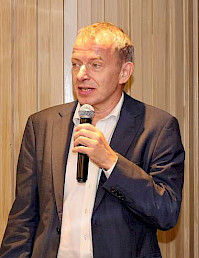 Dr. Rene van Berkel introduced ACEBA’s guidance for advancing circular business. He pointed out that the circular business transition does not follow a one-size-fits-all roadmap. Instead, companies can draw on a menu of activities across four functional components – Stocktake (clarifying the opportunities and risks that define the business case), Ambition (creating aspirational circular product and business imaginaries to drive the circularity transition), Delivery (making technical and operational changes), and Integration (embedding circularity into governance and decision-making).
Participants were also introduced to ACEBA's wider suite of knowledge products, including the Framework for Business Action for the Circular Economy in Southeast Asia, the Circular Economy Starter for East Asian Business, and the Circular Solution Canvas.
The overarching intent of Circular Economy is to bring the use of new materials and the disposal of waste materials as close as possible to zero, said Dr. Rene Van Berkel, ACEBA co-convenor.
Piloting the Circular Business Check
A central focus of the workshop was the Circular Business Check (CBC), the pilot online self-assessment tool that helps companies see where they stand on the circular business pathway across three pillars – Readiness, Maturity, and Impact. The tool was designed to help businesses reflect on what the circular economy means for them, identify opportunities and gaps, and demonstrate commitments and achievements. It was designed primarily for SMEs but is also applicable to business units under larger enterprises. The tool is currently in a pilot version, and participants were encouraged to sign up as pilot users. The ACEBA team is available to support the completion of the assessment. Feedback gathered during the testing period will be used by the ACEBA team to calibrate the tool ahead of its full release later this year.
Learning from one another
Participants took part in a breakout exercise, where they were grouped by industry sector to exchange experiences in applying circular economy practices and discuss how ACEBA's insights, tools, and network could best support their transition. The discussions revealed that many companies have started circular economy relevant (pilot) initiatives in their products and value chains, most commonly focused on improving recycling and increasing the use of recycled materials.
The breakout sessions showcased diversity in business examples. These included heat recovery and energy-efficiency systems, the collection and export of used cooking oil, conversion of food waste into fertilizers, sustainable packaging and consumer plastic waste processing, as well as zero liquid discharge systems and chemical-free cooling towers that enable water reuse. Participants represented both manufacturing and service sectors, demonstrating the broad applicability of circular business models. The discussions also highlighted opportunities for EU–Thailand collaboration, including the export of used cooking oil to Europe, subject to compliance with the International Sustainability and Carbon Certification (ISCC) scheme.
Why it matters and what comes next
The workshop is part of a series of activities that ACEBA is organizing in Thailand in 2026 year to encourage Thai businesses to embark on their circular economy journey and support them in becoming circular champions. The introduction of the Circular Business Check serves as the starting point, helping businesses understand their current level of circularity and identify practical steps for improvement. It responds directly to the needs of Thai companies for practical, business-oriented guidance on how to get started, where to focus their efforts, and how to measure progress along their circular transition. The initiative also contributes to the objectives of the 2021 ASEAN Circular Economy Framework and Thailand's Bio-Circular-Green (BCG) Economy Policy.
ACEBA will convene a design workshop with selected Thai companies later in 2026 to provide more in-depth support on how to create unique and appropriate circular product and business concepts and pathways. The second and final version of the CBC Tool is expected in the next quarter and will be available for wider application across Thai businesses. Additional ACEBA workshops will also be organized to continue promoting circular economy models with Thai businesses, to form a robust platform that will drive circularity across companies in Thailand.
Companies interested in taking part are encouraged to step forward as pilot users of the CBC, share documented Thai circular business cases, or simplyjoin ACEBA and help lead the model with their peers. Interest can be expressed through the ACEBA website (www.aceba.co) or by contacting TEI.
For more information contact: [email protected]
Related resources
Share: